

Ben Sidran: "Solidity Is a Performance"
Jazz, modernism, and the patterns behind music.

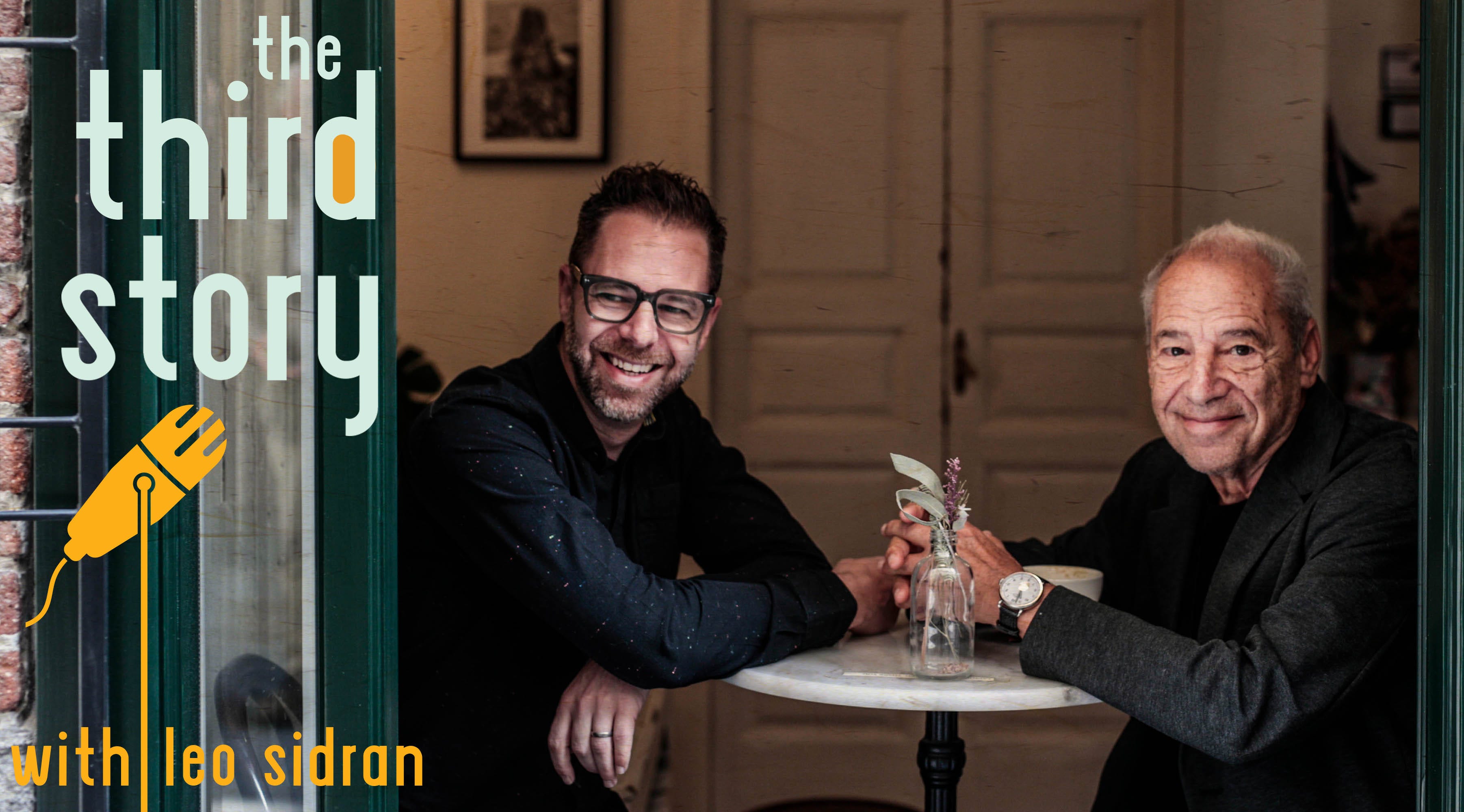
“Solidity is a performance,” my father said. “Stability is rhythm. Matter is music slowed down into form.”
He had been sitting at the piano for weeks trying to make sense of the ideas swirling around in his notes; architecture, overtones, the Fibonacci sequence, quantum mechanics. At a certain point everything begins to sound like a metaphor for everything else.
What he was trying to explain, in the end, was something simple. That beneath architecture, beneath music, beneath the stories we tell about them, there may be something more fundamental: The invisible structures that shape how the world moves.
The reason he was thinking about all this in the first place was a gig.
Sometimes the most meaningful work we do begins with a casual “yes.”
Inspiration comes from many places: dreams, accidents, flashes of insight. But sometimes it comes from something simpler: a deadline.
When asked which comes first the music or the lyrics, songwriter Sammy Cahn once said “The check.” For him, the gig was the muse.
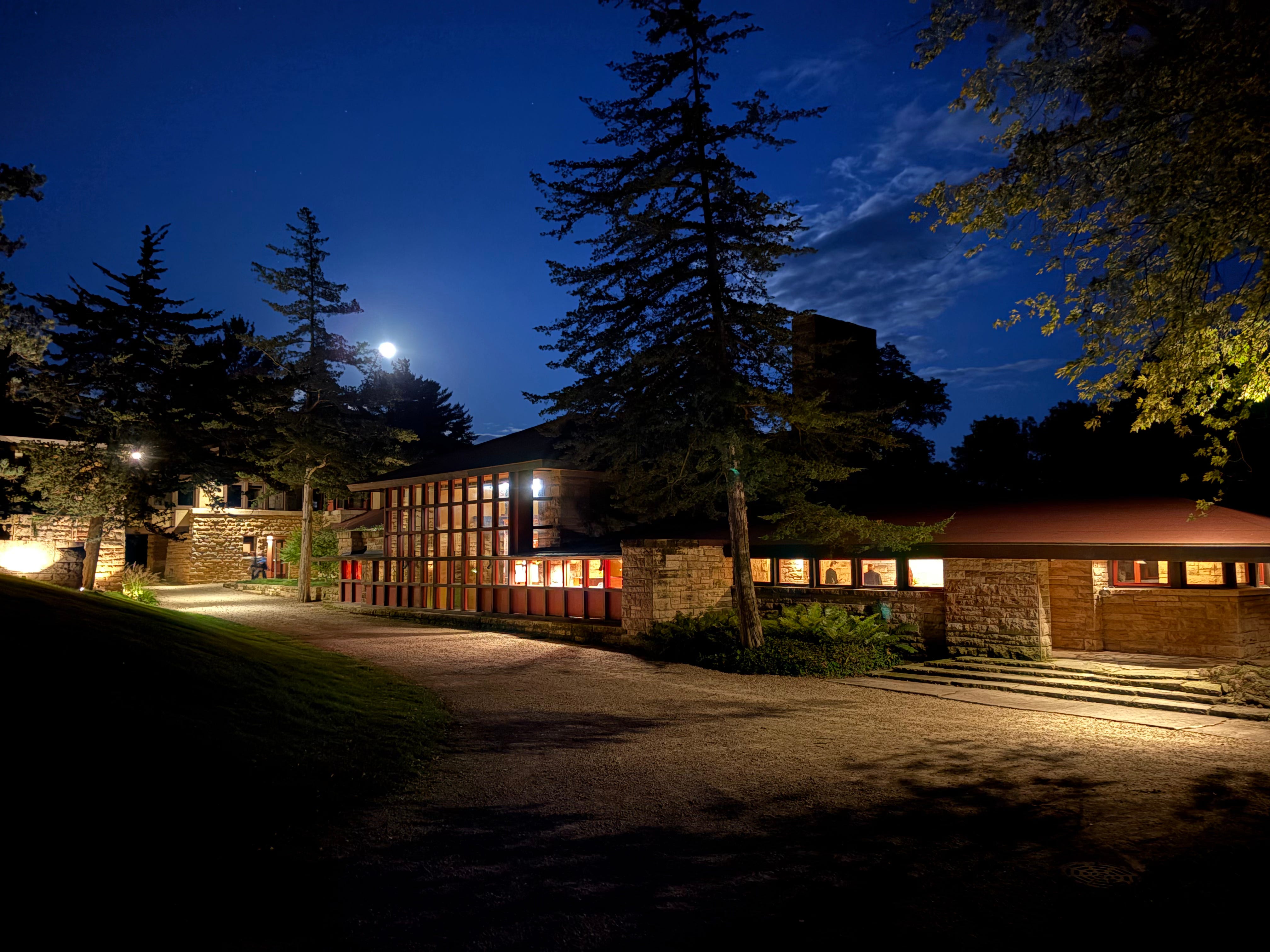
Last September my father, Ben Sidran, and I played a concert at Taliesin, architect Frank Lloyd Wright’s home and studio in Spring Green, Wisconsin.
Taliesin sits on 800 acres of rolling hills about an hour outside Madison. It’s one of the purest expressions of Wright’s Prairie School architecture. Long horizontal lines, natural materials, buildings that seem to grow organically out of the landscape.
Our concert took place in the Hillside Theater, a space where Wright’s architectural fellows and the surrounding community gathered for decades to watch films, hear lectures, and listen to music.
We had been asked to create a special program for the event. So I improvised an idea and sent it to the organizers.
“If, as Goethe wrote, architecture can be seen as frozen music, perhaps music can be seen as architecture thawed.”
It was highbrow enough to sound serious, yet vague enough to give us room to improvise.
After I signed the contract, I got around to telling my father what we had agreed to do. Fortunately, this is exactly the kind of assignment he enjoys.
Spring Green is about an hour outside Madison, where I grew up, and our family spent time out at Taliesin when I was a teenager. The cover of Ben’s 1990 album Cool Paradise was shot there.

At first the idea for our concert was just a playful concept. But as the event approached, our conversations started going deeper. Architecture and music. Overtones and the harmonic series. Patterns and ratios that seem to appear again and again in nature.
Ben organized the musical part of the evening around variations on the blues. His thinking was that the blues works the same way Wright’s architecture does: a simple structure that allows infinite variation.
The structure stays stable. The details are fluid. Within that framework, anything can happen.
But the deeper we tried to dig into these ideas, the further we drifted into the weeds. And by the time we arrived at Taliesin we had spent months talking about Fibonacci, quantum mechanics, and acoustic ratios.
Meanwhile, the audience had just come for an evening out. Pretty quickly our program wandered into the realm of the hardly relatable. Still, we felt pretty good about it afterwards.
A few months later Ben got a call from the Palm Springs International Jazz Festival, asking him to present a lecture with music about jazz and modernism during the city’s annual Modernism Week.
Palm Springs has become a pilgrimage site for fans of mid-century architecture. Every February thousands of people descend on the desert to tour the glass houses and low-slung pavilions designed by architects like Richard Neutra and Albert Frey.
Ben said yes immediately, encouraged by the memory of our performance in Spring Green. Then he watched the video of what he did and realized that it might have been… slightly less clear than we remembered.
Just as Frank Lloyd Wright had done a century before, Ben spends half of the year in Wisconsin and the other half in the desert (for Wright it was Arizona, for Ben it’s California).
When I arrived in Palm Springs a few days before the concert, I found him surrounded by pages of notes. He moved constantly between the piano and the computer, trying to corral months of thinking into something coherent.
He was circling around the relationship between sound and structure, vibration and form.
“The overtone series is our teacher of how things resonate in nature.” - Gil Goldstein
Years earlier I had heard similar ideas expressed by the arranger and pianist Gil Goldstein, who described the harmonic series not just as a musical phenomenon but as something closer to a natural law.
Goldstein believes that when music aligns with those natural resonances, listeners recognize it instinctively.
“Everyone has a universal musical mind, and that’s what we’re trying to contact in ourselves. When we do, people respond to it because they recognize it.”
He also points to the appearance of Fibonacci proportions in the music of composers like Bach.
“They found that in a lot of the shapes that Bach intuitively wrote… the height of the section comes at the Fibonacci number that divides it in the golden mean.”
The same mathematical patterns that appear in pinecones and seashells may also shape the way music unfolds.
The harmonica virtuoso Howard Levy took this idea even further when we spoke for The Third Story.
Levy described how rhythm and pitch aren’t separate musical dimensions at all. They’re the same physical phenomenon operating at different speeds.
“There’s no difference between rhythm and pitch. They’re just vibrations at different speeds.” - Howard Levy
In the overtone series, musical intervals emerge from simple numerical ratios — three-to-two for a fifth, four-to-three for a fourth.
Levy realized those same ratios can be translated into rhythm. “The fifth is a ratio of three to two in vibrations… If you slow it down a hundred times, you get the polyrhythm of three against two.”
Harmony and rhythm collapse into the same language. Different speeds / same structure.
And, when I first met Jacob Collier, he was nineteen years old and already thinking about groove in similar terms.
For Collier, rhythm can be understood as ratios inside the beat itself.
“If you think about swing as being like a percentage… 66 is triplet — the ratio of two to one. Then there are other ratios, like three to two.”
Groove, in other words, is mathematics that we feel in our bodies.
“To make a groove swing, things shouldn’t all line up. That’s why pop music doesn’t swing sometimes — because it’s all quantized.”
Before we even recognize harmony, our ears understand something more basic.
“A cadence is tension to release. That’s what the ear hears before it even knows there’s harmony.” - Jacob Collier

Meanwhile my father was circling these same ideas from his own vantage point. After weeks of writing and rewriting his lecture, he tried to sum up the entire concept in a few sentences.
“Solidity is a performance.
Stability is rhythm.
Matter is music slowed down into form.”
Over the years I’ve watched him prepare lectures, concerts, albums, radio shows, essays — each one beginning with a general idea and gradually turning into something structured and polished. At the center of his process is the search for a narrative. For Ben, everything comes down to a story.
This one felt a little different. There was a kind of existential urgency to it that past projects hadn’t quite had. At times it felt like he was fighting for his life as he tried to assemble the ideas.
This may explain why he chose to play his tribute to the existentialist philosopher Albert Camus and the myth of Sisyphus in the middle of a concert about modernist architecture.
Ben likes to say that Sisyphus, the Greek mythological figure condemned to push a rock up a hill for eternity, was lucky. Because he had a gig.
What I witnessed in Palm Springs was the slow process of translating intuition into language, the unrelenting task of pushing a rock up a hill. And ultimately, after diving deep into the mysteries of the natural world in search of some kind of source code, the story Ben discovered was his own.
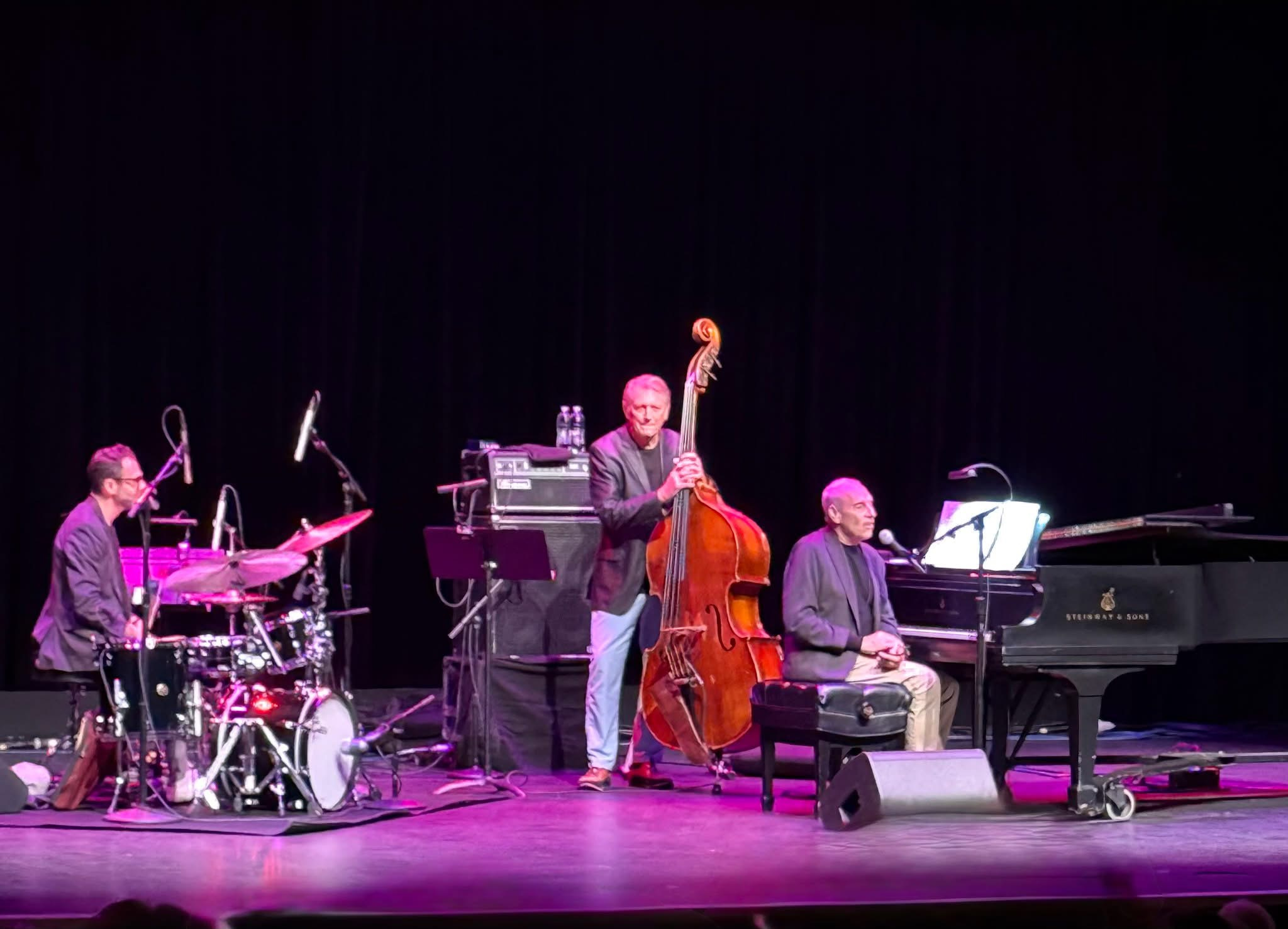
Maybe the goal was not to solve the mystery. Maybe the point was simply to keep searching for the clues. Because as long as he’s still searching, it means he has a gig, and the muse can show up for work, bringing all its invisible vibrations along with it.
LISTEN TO MY FULL CHRONICLE OF preparing for the gig with Ben, drawing on conversations with Gil Goldstein, Howard Levy, and Jacob Collier.
Great and thoughtful piece. Listen to Zappa’s Inca Roads
Can't wait to listen. Always love your conversations with Ben!